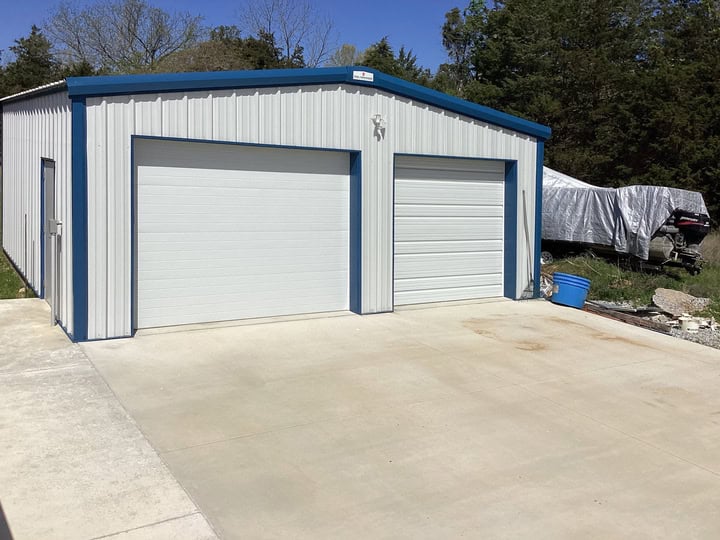
Description
The 40×50×14 is a building that earns its place on a property by doing exactly what a serious working structure is supposed to do — cover the right amount of ground, reach the right height, and get out of the way of the operation happening inside it. At 2,000 square feet of clear-span floor space and a 14-foot eave height, this configuration hits a balance point that a wide range of buyers recognize on first inspection: enough square footage to run a real operation, enough vertical clearance to handle the equipment that operation actually uses, and a footprint compact enough to site efficiently without dominating the property it sits on. It’s not the largest building in the Steel Commander lineup, and it’s not trying to be. It’s the right building for the specific range of operations that need exactly what it delivers.
The 40-foot width is a proven dimension for working buildings at this scale — wide enough to accommodate two generous bays side by side with functional working clearance between them, wide enough for a shop floor that positions equipment along both walls and maintains a clear, productive center aisle, and wide enough for a drive-in configuration that handles full-size vehicles and equipment without the tight maneuvering that narrower buildings impose on daily operations. Fifty feet of depth gives that width organizational range: enough to run distinct front and rear zones with different functions, enough to handle a growing inventory or equipment collection without immediately running out of usable floor space, and enough to give the building genuine staying power as an operation scales up over the years following the initial build.
Fourteen feet to the eave is the specification that consistently separates the 40×50×14 from standard commercial alternatives in the same footprint class. At 12 feet, a building this size is adequate for most ground-level operations and standard equipment. At 14 feet, it becomes capable in a different and more specific sense — capable of handling the taller vehicles, larger equipment, and overhead systems that serious operations actually run, rather than the baseline inventory that 12-foot clearance was designed around. A 12-foot commercial overhead door installs with proper clearance and operates without compromise. A compact tractor with a cab and front loader raised to transport position clears the opening without a second thought. An enclosed trailer with roof equipment or ventilation hardware fits without being a daily management problem. Wall-mounted storage systems run higher, reaching into the vertical space between 10 and 14 feet that a shorter building doesn’t have. These aren’t dramatic individual capabilities — but collectively, across the daily use of a working building, they define the difference between a structure the operation fits comfortably inside and one it’s constantly adjusting around.
Every Steel Commander building is engineered for the specific site where it’s being installed, not a national average that may or may not reflect the actual conditions at that location. A 40×50×14 going up on a Florida Gulf Coast property is designed for the wind uplift forces, humidity exposure, and storm preparedness requirements of that environment. The same building heading to a Northern California site incorporates seismic design factors and the regional fire and wind considerations that shape construction standards there. In Texas, high-wind engineering, extreme thermal performance, and severe storm resilience are the primary structural design drivers. Your building is engineered and certified for your location — and that regional precision is standard on every structure, not an optional specification you have to ask for.
The 40×50 at 14 feet — where the dimensions converge
Every steel building configuration has a set of operational sweet spots — the specific applications where the combination of width, depth, and eave height converges into something more than the sum of its dimensions. For the 40×50×14, those sweet spots are worth naming directly, because they describe the building’s value more precisely than any general description of its specifications.
The first sweet spot is the two-bay shop. Forty feet of clear-span width divided into two bays of roughly 18 to 20 feet each, with a shared center aisle — this is the floor plan that automotive shops, equipment service centers, and fabrication operations run most efficiently at this scale. Two bays wide enough for full-size vehicles or substantial equipment, a center aisle wide enough for technicians and material movement, and 50 feet of depth to give each bay the room to function properly from the door to the back wall. The 14-foot eave height gives both bays overhead clearance for lifts, ceiling-mounted equipment, and the tall vehicles that serious service operations handle daily. This is the floor plan the 40×50×14 was built for.
The second sweet spot is the split-function facility — a building that handles two distinct operational roles simultaneously without either one compromising the other. Fifty feet of depth divides naturally into a 25-foot front section and a 25-foot rear section, each with the full 40-foot width of the building available and each accessible independently through its own door configuration. A front section running as an active work area — shop, service, production, customer-facing functions — and a rear section running as organized deep storage for equipment, inventory, or materials. Two operations under one roof, each with enough space to function properly, separated by function rather than walls and connected by the shared floor plan that makes moving things between them efficient rather than complicated.
The third sweet spot is the transitional facility — the building a growing operation builds when it’s past the point where smaller structures are adequate but not yet at the scale where a 40×70 or 40×80 is the obvious answer. The 40×50×14 is sized to handle an operation at its current scale comfortably and absorb two or three years of growth without immediately pressing against its limits. That transitional capacity — room to grow into, not just room for today — is one of the specifications that doesn’t appear on a dimension sheet but shows up in how long the building keeps serving the operation before a second structure becomes necessary.
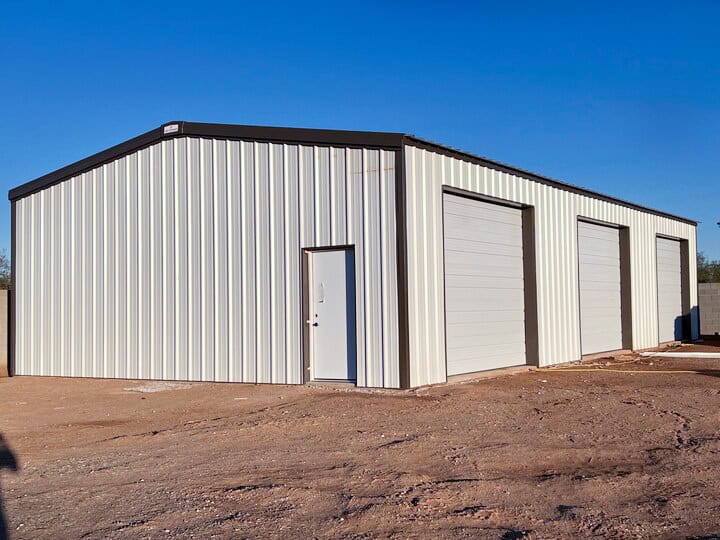
Both rigid frame and C-channel versions of the 40×50×14 are available with the complete Steel Commander customization suite. Commercial roll-up doors sized and positioned for your specific bay configuration and equipment dimensions. Personnel doors for daily operational foot traffic at the front, side, or rear of the building. Window and skylight packages that bring productive natural light into a 50-foot floor plan. Insulated wall and roof panel systems for year-round climate comfort, temperature-sensitive storage, or workshop environments where working conditions matter as much as covered square footage. Whatever the 40×50×14 needs to do for your operation, we’ll configure it to deliver exactly that from the first day the doors go on.